Every service is treated equally
The right work cannot define the company because every capability receives the same prominence.
Construction, home and property services
For established general contractors, specialty trades, home-service companies, restoration firms, building specialists, facility providers, and property-service businesses.
The specific symptoms change by sector, but the commercial consequence is the same: real capability is not transferring clearly enough to the buyer.
The right work cannot define the company because every capability receives the same prominence.
The buyer sees finished work but not the conditions, decisions, controls, sequencing, communication, or verified result.
Different buyers, risks, project values, proof standards, and sales journeys are forced into one broad presentation.
The company becomes compelling only after the owner explains how the work is actually delivered.
Substance & Signal does not invent authority. It finds, organizes, and expresses the authority already present inside the company.
The real value often lives in site conditions, communication, phasing, safety, documentation, scheduling, coordination, warranties, property protection, and the ability to prevent avoidable risk.
The market presence should show which work leads, who it is built for, how risk is controlled, what proof exists, and whether the next step is an urgent call, booking, site review, quote, or commercial conversation.
Position, proof, message, brand, website, and inquiry are rebuilt around the buying conditions of this market.
Separate priority work from supporting work and homeowner opportunities from commercial ones where the buying conditions differ.
Turn projects, reviews, methods, standards, warranties, and outcomes into evidence the buyer can evaluate.
Translate communication, coordination, property protection, safety, scheduling, technical judgment, and warranty support into confidence.
Give urgent, planned, residential, commercial, and poor-fit opportunities the correct path to action.
The exact scope is determined after diagnosis. These are common areas where established companies become unclear or commercially under-expressed.
Define the customer, project type, service, or operating condition that should govern the market position.
Organize capabilities around commercial importance rather than an equal list of everything the company can do.
Document the condition, constraints, decisions, controls, delivery, and verified result behind completed work.
Separate proof, message, qualification, and calls to action where the buying conditions differ.
Support search, reviews, service pages, booking, phone calls, and quote requests without reducing the brand to lead generation.
The demonstration takes a credible construction company from broad general-contractor language to a clearer position built around restoration and renovation inside active buildings.
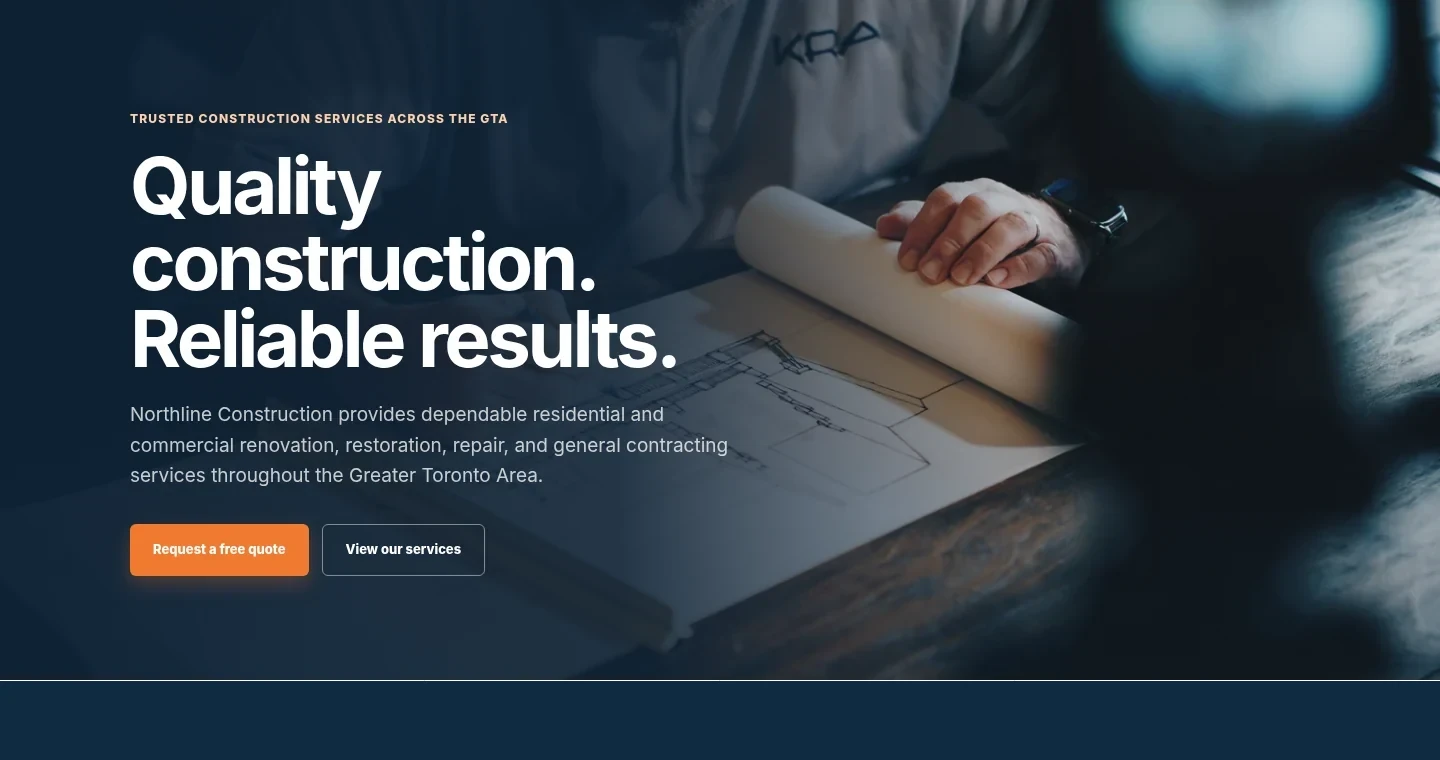
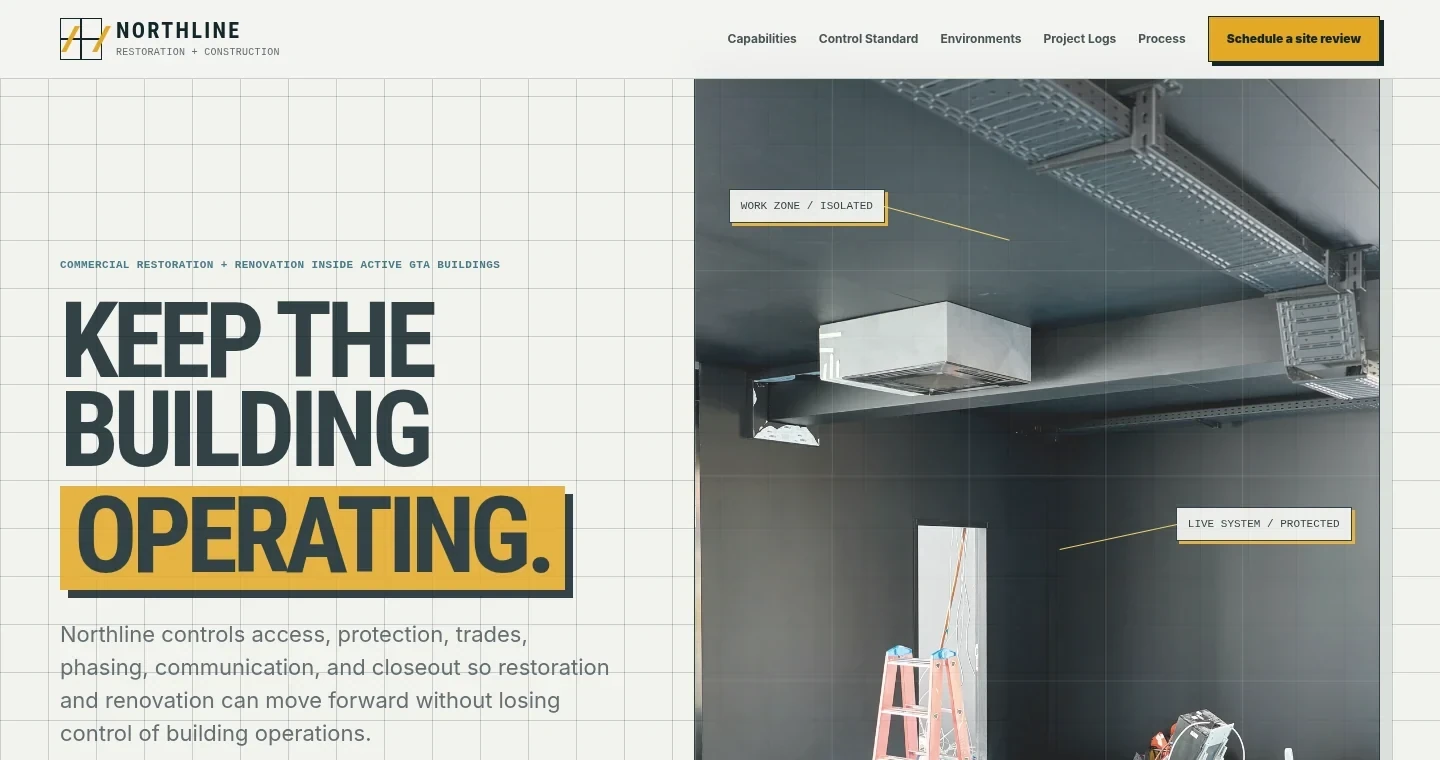
The transformation reorganizes the priority buyer, service hierarchy, project proof, ownable method, brand expression, and inquiry path rather than merely replacing the visual design.